


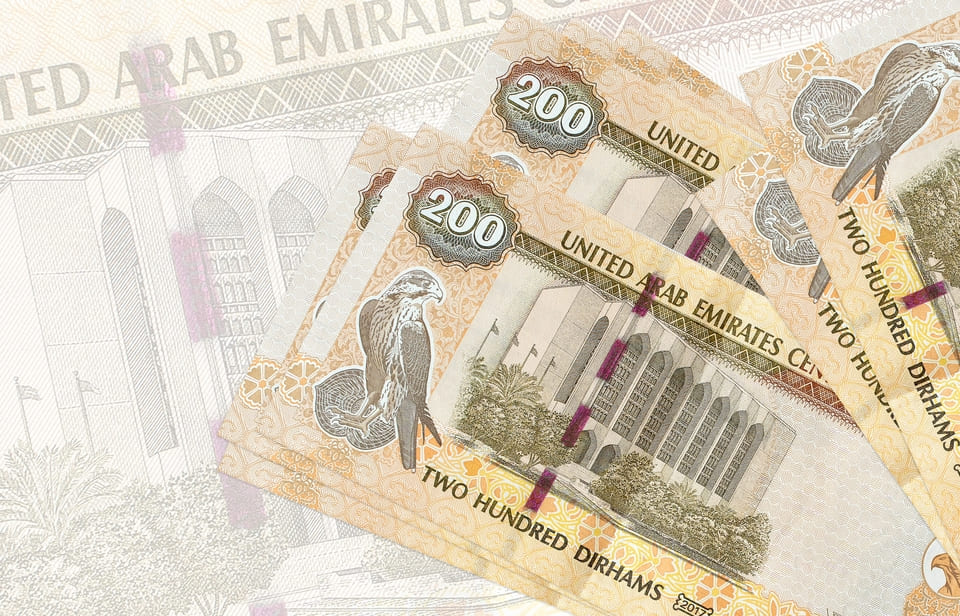
VAT at 5% has applied in the United Arab Emirates since 1 January 2018. It supports fiscal diversification and funds public services (healthcare, education, infrastructure). The Federal Tax Authority (FTA) administers VAT, guides businesses and consumers, and enforces procedures. This overview reflects the Ministry of Finance’s published framework.
VAT: concept and mechanics
VAT is an indirect consumption tax levied at each stage of the supply chain (production → distribution → retail). Businesses collect VAT on sales (output VAT) and deduct input VAT on purchases (input VAT). The end consumer bears the cost.
VAT versus sales tax
Sales tax typically targets the final sale of goods to consumers, while VAT applies to goods and services throughout the chain. VAT also applies to imports to ensure a level playing field for domestic providers.
UAE implementation and the FTA
A standard rate of 5% applies. Established in 2016, the FTA manages collection, distributes revenues and oversees tax procedures. It also publishes guidance and provides assistance to businesses and consumers.
Registration and scope
- Mandatory: where taxable supplies/imports exceed AED375,000 over 12 months (or are expected to do so).
- Voluntary: where the AED187,500 threshold is exceeded (income or expenses).
- Obligations: maintain clear records, levy VAT on taxable supplies, file/pay through the FTA.
Zero rated and exempt sectors
Zero rated (0%) supplies
- Exports of goods/services outside the GCC;
- International transport and related supplies;
- Certain sea/air/land transport means (ships, aircraft);
- Investment grade precious metals (≥ 99% purity);
- Newly built residential property (first supply within three years);
- Certain education and healthcare services and related supplies.
Exempt supplies
- Specified financial services;
- Residential property (other than the first supply within the initial three years);
- Bare land;
- Local passenger transport.
Businesses with mixed activities (taxable/exempt) must apportion input VAT (default: inputtax ratio; alternative fair methods may be agreed with the FTA).
Real estate and public sector
- Real estate: commercial supplies are taxable (5%); residential supplies are generally exempt (first supply within three years zero rated so developers can recover construction VAT).
- Government entities: their supplies are generally taxable to avoid a competitive advantage, with exclusions where no private sector competition exists or the entity is a sole provider. Certain government entities may obtain VAT refunds to preserve budget neutrality.
Registrants’ responsibilities
- Charge VAT on taxable supplies and report VAT collected and deductible at regular intervals (FTA platform).
- Keep required records (invoices, supporting documents) for audit.
- Claim refunds where input VAT exceeds output VAT.
The UAE VAT regime is built on well established principles: a single 5% rate, well defined zero rating and exemptions, and clear obligations for record keeping, filing and payment. By structuring compliance (registration, systems, evidence) and understanding sector regimes (real estate, education, healthcare, finance), businesses can secure their positions and streamline FTA interactions.
Our expert tax lawyers are available to answer all your questions and provide advice. Our consultations can be held in person or via videoconference. You can make an appointment directly online at www.agn-avocats.fr.
AGN AVOCATS – Tax Law contact@agn-avocats.fr 09 72 34 24 72
- Administrative and Public Law
- AGN Football Club
- AGN News
- Banking, finance and insolvency
- Business Law Dubaï
- Civil Service
- Contract Law & Distribution
- Corporate Law
- Criminal Law
- Equine Law
- Family Law
- Family Matters
- Immigration
- Immigration
- Immigration Law Dubaï
- Inheritance
- Inheritance law Dubaï
- Insurances & Liabilities
- Intellectual Property and Digital Law
- Labour law
- Labour Law Dubaï
- Litigation & dispute resolution
- Non classé
- Property Dubaï
- Real Estate
- Sale of business
- Specific rights
- Sports law
- Tax
- Tax Law Dubaï
- Technologies, blockchain & digital assets
- Tourism Law